

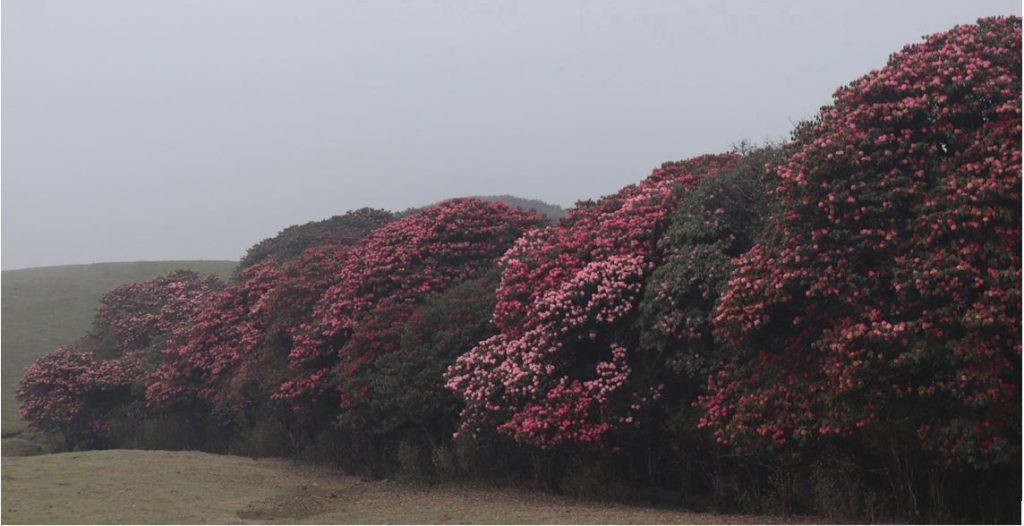
The arrival of spring has turned eastern Nepal’s famed Mundum Trail into a breathtaking canvas of colour, as hillsides along the trekking route burst into bloom with vibrant rhododendrons, drawing nature lovers, trekkers, and adventure seekers from across the country and beyond.
Recognised among Nepal’s 100 key tourism destinations, the Mundum Trail in Khotang district is currently at its scenic peak, adorned with white, crimson, and pink rhododendron blossoms that blanket the rolling hills and alpine meadows, creating a mesmerizing spectacle for visitors.
Beginning from Tawabhanjyang in Khimida, Sakela Rural Municipality–3, the trail winds through pristine ridgelines and lush landscapes, where flowering forests, sweeping grasslands, and panoramic Himalayan vistas combine to offer one of Nepal’s most immersive trekking experiences.
For many visitors, the blooming season has become a compelling reason to make the journey.
“The ambience here is simply mesmerizing,” said trekker Ojan Babu Acharya of Diktel, who recently completed part of the trail. “The rhododendron-covered hills, fresh mountain air, and vast meadows create an experience that feels almost surreal.”
Nature’s Grandeur, Shared Digitally
The visual splendour of the Mundum Trail is increasingly finding audiences far beyond the mountains, as visitors share photographs and videos across digital platforms such as Facebook and Instagram, helping boost the destination’s visibility and tourism appeal.
Nature enthusiasts-both domestic and international-have been actively documenting the trail’s extraordinary seasonal beauty online, turning Mundum into a growing social media favourite and contributing to a notable rise in internal tourism during the rhododendron season.
Yet beyond the blossoms, the trail offers far more than scenic beauty.
Trekkers encounter expansive highland meadows, rich biodiversity, dramatic ridgelines, and deep cultural heritage elements that make Mundum a destination where nature, adventure, and tradition converge.
Researchers have identified 18 species of rhododendron in and around the Maiyung meadow, underscoring the region's ecological richness.
“Whenever I get time, I return here,” said visitor LB Magar. “The journey relieves fatigue, refreshes the body, and offers a sense of peace that is hard to find elsewhere.”
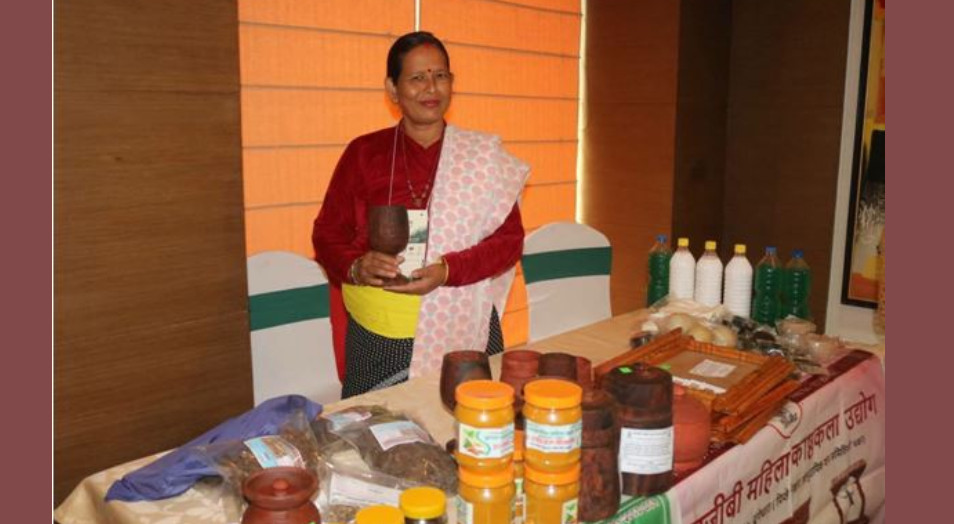
He added that tasting locally produced foods, especially dairy products made from yak milk, adds another memorable dimension to the trekking experience.
Where Ancient Traditions Still Thrive
One of Mundum Trail’s most distinctive cultural features is the continued practice of transhumance-the seasonal movement of livestock between lower settlements and highland pastures.
As spring arrives, herders move sheep, yaks, and horses to alpine grazing grounds in Maiyung, Merung, and Dhodre, meadows famed for their rich pasturelands.
Laxman Sampang ‘Samip’, a sheep herder from Kopilasgadhi Rural Municipality–1, said dozens of households still maintain the centuries-old nomadic livestock tradition.
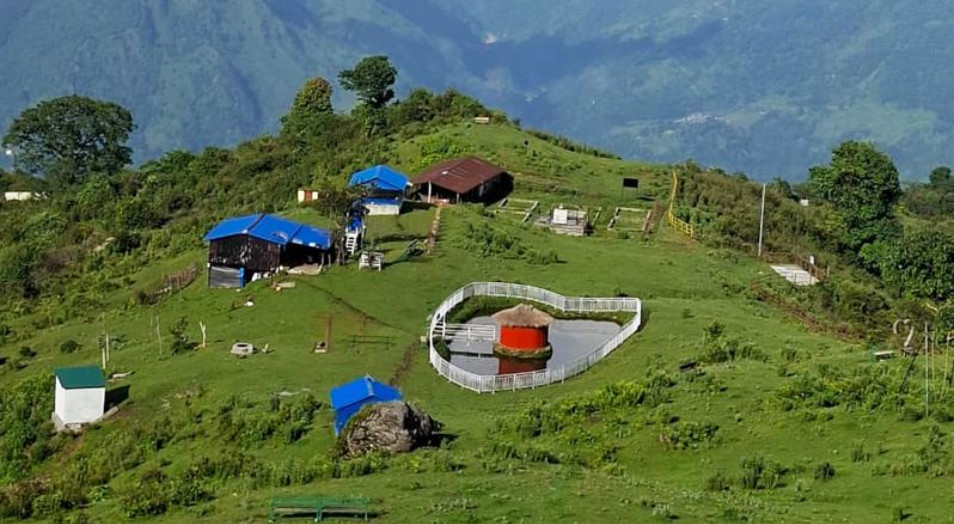
This enduring pastoral lifestyle has also given rise to a unique tourism experience known as “goth-stay” -a rustic variation of homestay where trekkers stay alongside herders in highland shelters, sharing simple yet nourishing meals prepared from local ingredients.
Guests are treated to traditional foods such as buckwheat dhindo, hearty chicken soup, yak dairy products, millet dishes, beans, potatoes, and fresh seasonal greens-authentic flavours deeply rooted in the mountain way of life.
A Journey Through Kirat Heritage
Mundum Trail is not merely a trekking route-it is also a living cultural corridor deeply connected to the Kirat civilisation, which spans the eastern hill districts of Khotang, Bhojpur, Solukhumbu, and Sankhuwasabha.
The trail takes its name from Mundum (Mundhum)-the sacred oral scripture of Kirat communities, including the Rai, Limbu, Yakkha, and Sunuwar peoples. The scripture embodies their mythology, rituals, spiritual beliefs, and moral values, making the trail as culturally significant as it is naturally spectacular.
Adding to its prominence are iconic high-altitude destinations such as:
Temke Maiyung (3,165 metres)
Salpa Pokhari (3,750 metres)
Silichung Peak (4,165 metres)
The full trekking circuit takes approximately 13 days for foreign trekkers and around 10 days for Nepali visitors, traversing mountain ridges, alpine grasslands, and sacred landscapes.
Chairman of the Maiyung-Temke-Salpa-Silichung Tourism Promotion Centre, Ramesh Rai, said the trail offers more than adventure.
“Walking these hills may be physically demanding, but visitors return rejuvenated rather than exhausted,” he said.
With spring blossoms in full glory, wildlife sightings that may include red pandas, Himalayan tahr, wild bees, and diverse bird species, and a rare blend of ecology, spirituality, and indigenous culture, the Mundum Trail is steadily emerging as one of Nepal’s most distinctive highland tourism experiences.
For travellers seeking both natural wonder and cultural depth, the blooming hills of Mundum offer a journey worth every step.
© 2026 All right reserved to Nepalraibar English | Site By : Sobij