
Two months ago, Jugrani Chaudhary of Tikapur municipality-5 had a very difficult time. Though she was busy in household work throughout the day, her family members were not satisfied with her work.
Jugrani shared that she was mentally stressed as she could not earn much from domestic work. But now it is different story. Her life has been changed due to a 25-day training recommended by a cooperative.
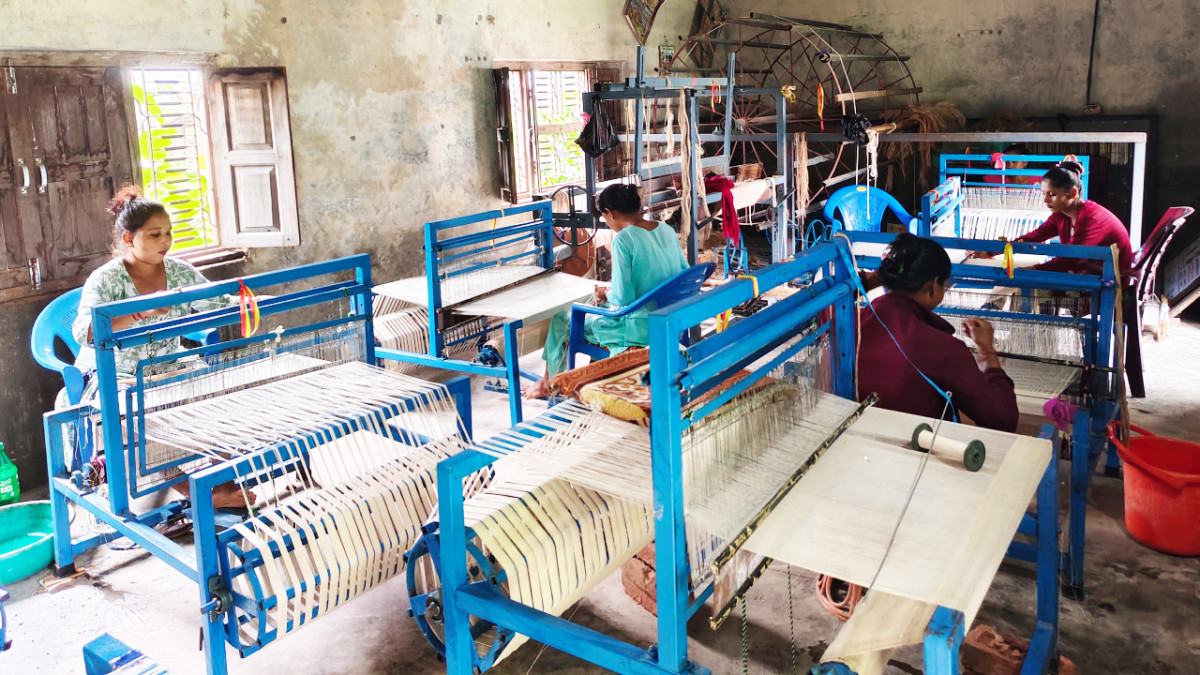
She, along with other women, has now become successful in being connected with an enterprise after Dhansinghpur Ekata Samaj Saving and Credit Cooperative provided a power loom at a 50 per cent grant, along with a 25-day free training.
Jugrani has now started weaving raw cloth from banana fiber. She spends her daily life weaving raw cloth. "Earlier, I did not believe that cloth was also made from the banana plant. Now, I am weaving raw cloth from banana fibre. I also feel independent," she shared.
The Cooperative had provided free training to its eight women members. The women, who were imparted with training and became self-dependent, are very excited after getting a job.
"There will be no problem earning money if we have skill. Society's perspective towards us has also changed," she argued.
Similarly, Kamala Saud of the same place shared, "Earlier, it was difficult to spend time at home; but now, we are busy and do not have enough time for ourselves."
The raw cloth produced by the women is exported to Kathmandu, and the Allo Fiber market in Kathmandu purchases it at Rs 300 per metre.
Sakuntala Chaudhary of Tikapur municipality-7 mentioned, "The demand for raw cloth manufactured from banana fiber is high. We have not been able to supply it as per the demand of a single company.
She expressed the belief that they could produce more cloth if they had a modern loom.
The cooperative has been facilitating the export of the produced cloth. For the past two years, the cooperative, which has been producing yarn from banana fiber that was being wasted, has been manufacturing and selling yarn.
The cooperative's manager, Ramkrishna Chaudhary, stated that they have not been able to meet the market demand for yarn. "We have not yet had to pay for the raw material needed for banana fibre yarn. The produced yarn has not been able to meet the market demand," he says, adding: "At this point, we haven't even been able to provide yarn for ourselves."
Women are expecting support from the government. They have expressed a desire for assistance with skills and modern machinery needed to produce other materials from the produced cloth.
"By producing fabrics along with that, we could earn even better by making necessary materials from it," says local Kamala Kumari Chaudhary. "We need more skills and support for modern machines. We can invest some amount ourselves."
She mentioned that products like hats, bags, slippers, shoes, and quilts can be produced from banana fabric. Although the local government spends millions on training local women in sewing and tailoring every year, Chaudhary emphasizes that investment is necessary to use the raw materials that are wasted in their region to become self-reliant.
"Tikapur is known for its bananas. There are foundations for every citizen to become self-reliant from those bananas," she states, "Investment is essential. If the local government can provide similar training to more women, jobs can be created on their own."
Currently, more than a thousand hectares of land are being used for banana cultivation in Tikapur. After the banana is produced, fabric is produced from the discarded parts of the banana plant (stem).
© 2026 All right reserved to Nepalraibar English | Site By : Sobij