Israel’s Strike in Doha Raises Questions Over Regional Stability and Qatar’s Mediator Role

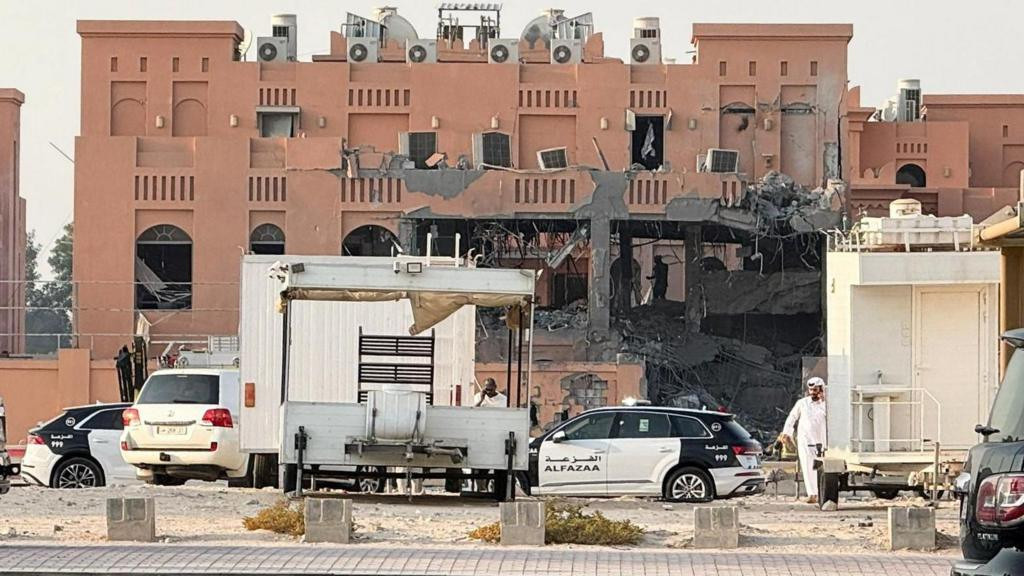
Israel launched an unprecedented airstrike on Tuesday in the heart of the Qatari capital, Doha, targeting a building said to house senior Hamas officials. Israeli authorities described the operation as an attempt to assassinate the group’s leaders, even as they were reportedly engaged in discussions over a U.S.-backed ceasefire proposal.
The strike, which hit Doha’s diplomatic district-a densely populated area surrounded by schools and residential neighborhoods-killed several family members and aides of Hamas leaders, according to sources. Qatar’s Interior Ministry confirmed the death of one security officer and several injuries.
The attack has drawn swift and widespread condemnation, with analysts warning that it could destabilize the fragile regional environment and place Qatar’s long-standing role as mediator in jeopardy.
International Outcry
Qatar’s Foreign Ministry denounced the attack as a “serious threat to the security of Qatari citizens and residents.” UN Secretary-General António Guterres called it a “flagrant violation of Qatar’s sovereignty,” stressing that “all parties must work towards achieving a permanent ceasefire, not destroying it.”
Saudi Arabia, Iran, Egypt, Jordan, Türkiye, and the Arab League joined in condemning the strike. Iranian officials labeled it “extremely dangerous and criminal,” while Saudi Arabia cited it as part of Israel’s ongoing violations of international law.
Steven Wright, professor at Qatar’s Hamad Bin Khalifa University, described Israel’s actions as “reckless” and said the strike portrayed the country as a “rogue state with no interest in peace.”
Why Doha?
Analysts argue that Israel sought to disrupt Hamas’s leadership structure and gain leverage in ceasefire talks. Kheir Diabat of Qatar University said the strike aimed to “exclude Hamas from the decision-making process, paving the way for a deal with a Palestinian side more willing to accept Israeli conditions.”
Eyal Zisser of Tel Aviv University added that the move was part of Israel’s long-stated vow to “punish all those involved in the Oct. 7, 2023 Hamas attack wherever they are.”
While the U.S. denied direct involvement, a White House official told Al Jazeera that Washington had been “informed of the operation.” Observers say the U.S. reaction will be crucial in shaping the trajectory of its relations with both Israel and Qatar.
Pressure on Qatar’s Mediator Role
For more than a decade, Qatar has hosted Hamas’s political bureau and played a central role in mediating between the group, Israel, and other regional stakeholders. The Doha strike, however, has cast doubt on whether Qatar can continue in this role without its neutrality or security being compromised.
Qatari Prime Minister Sheikh Mohammed bin Abdulrahman Al Thani vowed a “comprehensive response” to deter future attacks, while stressing that mediation efforts would continue despite heightened risks.
Palestinian analyst Hussam Al-Dajani noted that Qatar might leverage the incident diplomatically and legally, including through the UN, to strengthen calls for the implementation of Security Council Resolution 2735, which demands Israel’s withdrawal from Gaza.
What Next?
While Hamas leaders reportedly survived the strike, the attack has significantly raised tensions in the region. Analysts warn that it may complicate ongoing negotiations, weaken Qatar’s mediating position, and deepen instability across the Middle East.
Whether the move strengthens Israel’s bargaining hand or backfires by uniting international opposition remains to be seen. For now, the unprecedented strike has shifted the dynamics of the Israeli-Palestinian conflict beyond Gaza, directly into the Gulf.
© 2026 All right reserved to Nepalraibar English | Site By : Sobij