
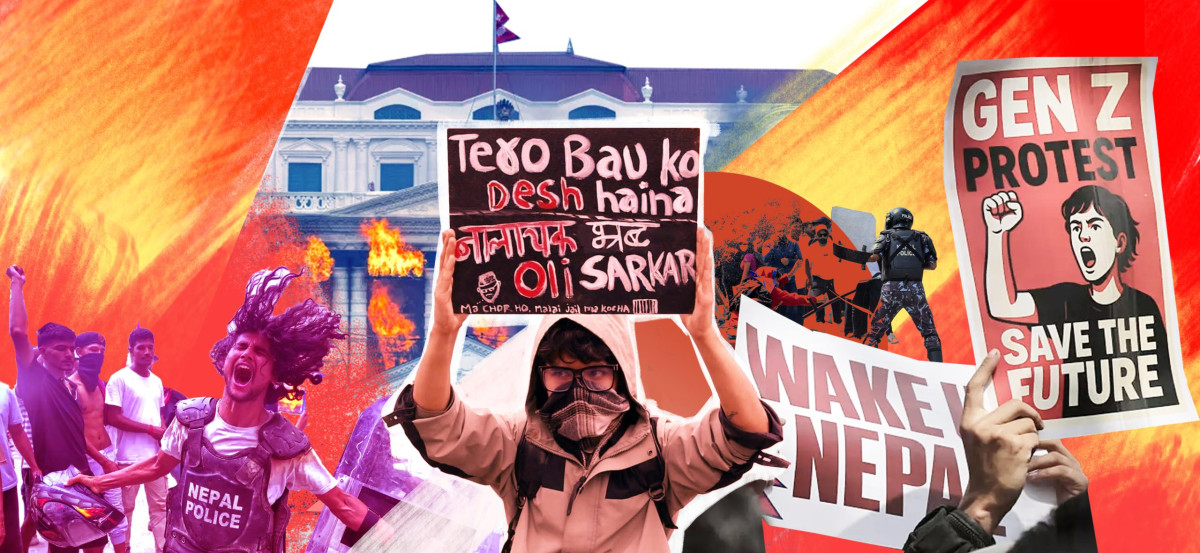
The Gen Z movement of Nepal, which erupted on September 8 and 9, resulted in more than 70 martyrs, over 2,100 injuries, and widespread destruction of public and private property. The entire nation is mourning the souls of the departed, while simultaneously looking ahead to the election scheduled for March 5, 2026.
Taking office, the Prime Minister (PM) of the interim government, Sushila Karki, remarked:
“The movement that took place in the country was extraordinary, unlike anywhere else. In just 27 hours of protest, a radical transformation occurred.”
Gen Z is a generation that has grown up alongside rapid technological development, and technology has largely shaped their lifestyles. They have proven wrong the critics who dismissed them as mere “keyboard warriors” incapable of real-world impact. By mobilizing through digital platforms, they turned technology into the very tool that influenced the trajectory of this historic movement.
The Nepo-Baby Trend
The people of Nepal, particularly Gen Z, have long been frustrated with rampant corruption, irregularities, poor governance, and political instability. Out of this frustration, something began brewing on social media.
In early September, young Nepalis began making reels showcasing “Nepo-Babies” - privileged children of elites flaunting their foreign trips, luxury purchases, expensive cars, and misuse of state resources. Gen Z captions read: “Our parents paid taxes so they can enjoy this lifestyle,” while working youths posted: “Working hard to pay taxes so these Nepo-babies can fund their next foreign trip.”
On September 4, the government banned 26 social media platforms. International media outlets framed the protests as a reaction to the ban, but this was not accurate. The ban, though short-lived, was seen by Gen Z as a symbolic message: the elites could do as they pleased, while ordinary citizens were expected to remain silent.
Soon, a new caption began appearing under Nepo-Baby trend videos: “September 8-Maitighar Mandala.” This marked the beginning of the uprising.
Mobilisation for September 8
The protest would not have been possible without technology. There were no central leaders, only social media figures guiding protestors on safety, legality, and peaceful conduct. Some even provided advice on what to do if arrested.
Among the most prominent figures was Miraj Dhungana, who actively pushed protest agendas online. The evening before the protest, he visited Durga Prasai, a known royalist sympathizer, to urge him not to politicize the youth-led movement. Prasai, however, distorted the meeting by posting a misleading photo implying influence over the protest. Following the protest, Miraj made his social media accounts private, raising fears he had been silenced. He later confirmed he was safe but had received disturbing threats.
Another leading figure, Prashamsa Subedi, used her platform to raise issues of corruption, politics, and governance, voicing frustrations that resonated widely with Gen Z. Similarly, comedian Nimesh Shreshtha shifted from satire to serious calls for protest, urging his followers to participate.
Technology united Gen Z under core demands:
“No-Not-Again” - rejecting the return of the “Unholy Trinity” of former prime ministers still dominating politics.
Accountability - demanding justice for those responsible for shooting peaceful protestors.
Anti-royalism - making clear that monarchy has no place in Nepal’s future.
Anti-corruption - calling for investigations into entrenched corruption within state institutions.
Youth in governance - demanding greater youth participation in policymaking.
The protests, powered by social media, culminated in calls for early elections.
Internet Culture and Protest Symbolism
A recurring image during the protests was the Jolly Roger flag of the Straw Hat Pirates from the Japanese manga and anime One Piece. This symbol has appeared in youth protests across Asia, representing rebellion against unjust authority.
To Gen Z, the Straw Hats embody resistance against oppressive systems, echoing their fight for freedom and justice. With the internet making One Piece widely accessible, its ideals have strongly influenced Nepal’s digitally connected youth.
The Discord Republic
On September 10, the Discord group Youths Against Corruption brought together tens of thousands of Gen Z members from Nepal and abroad to debate who should be the country’s next PM.
Al Jazeera’s Samik Kharel described it as: “A revolutionary counter to the traditional practice of politicians choosing leaders behind closed doors.”
The server quickly grew to more than 145,000 users, though trolls and outsiders disrupted discussions. Nevertheless, after a heated debate, names like Balen Shah, Harka Sampang, Kulman Ghising, and Sushila Karki emerged. Eventually, Sushila Karki gained support, later accepting the youth’s trust, leading to her appointment as Nepal’s first female Prime Minister.
Conclusion
The Gen Z movement in Nepal has shown that a generation once dismissed as “keyboard warriors” can, in fact, shake the foundations of one of the most powerful governments in the country’s history.
What began as online frustration over corruption and privilege exploded into a people’s uprising. For the first time in nearly a decade, Nepal has a new PM outside the traditional parties.
The struggle is far from over. For lasting change, Gen Z must consolidate around shared agendas, resolve differences through dialogue, and push for institutional reform. If they fail, they risk remaining followers instead of becoming the leaders of tomorrow. Enough is enough.
[The author is Program Coordinator and Research Associate at the Nepal Institute for International Cooperation and Engagement (NIICE)].
© 2026 All right reserved to Nepalraibar English | Site By : Sobij